Refine Your Results By:

thong
(59 items)
thong

Select filter

Size 8 styles

Price 2 styles

Select filter

to

Select filter

More Filters

Fabric 5 styles
Rise 2 styles
59 items
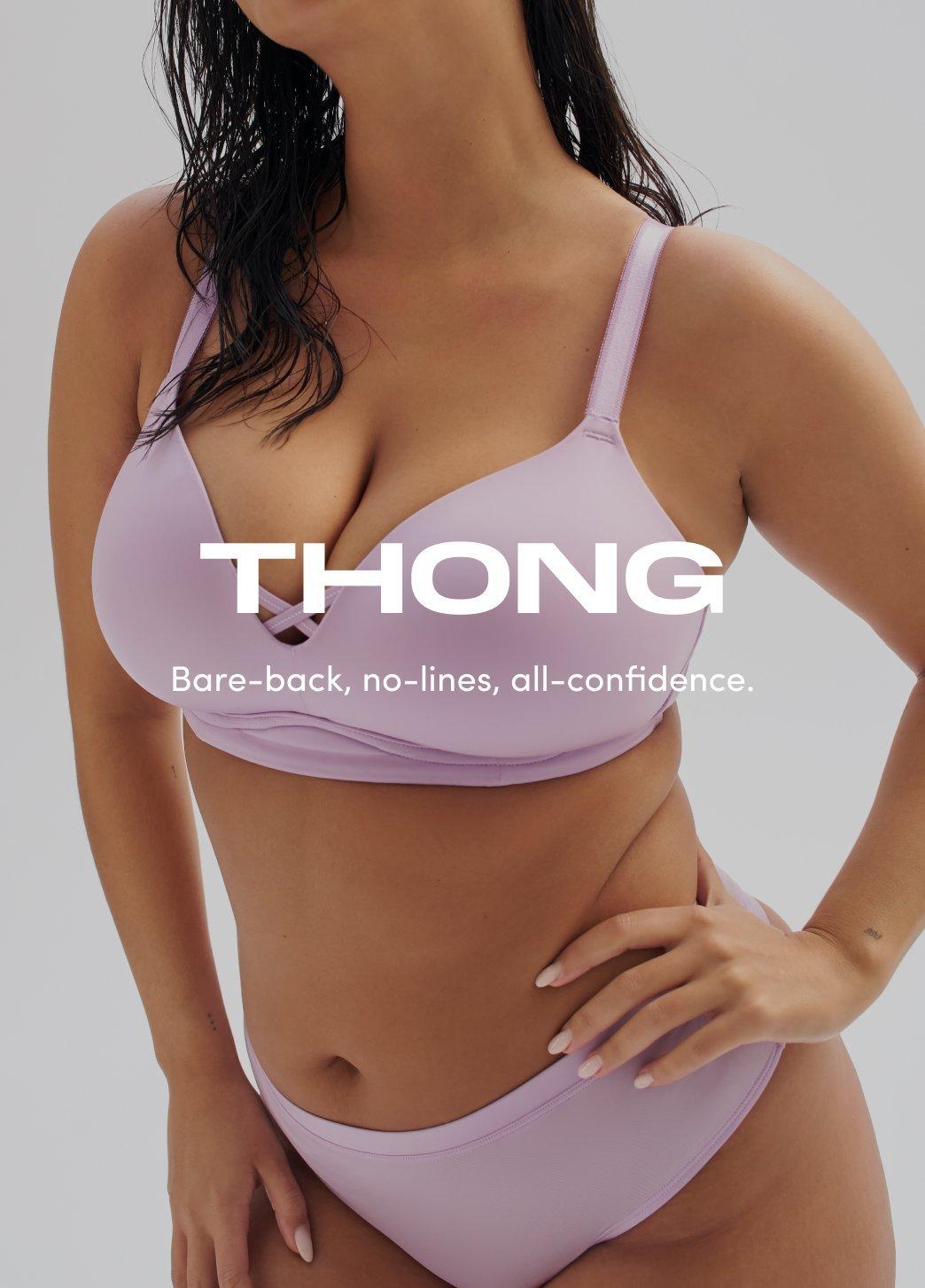
  • Model wearing a lavender bra and matching thong, shown from chest to hips against a light background. On image text reads Thong. Bare-back, no-lines, all-confidence.

Plus Size Thong Panties Designed for Comfort and Minimal Coverage

What are thong panties?

Thong panties are an underwear style with front coverage and minimal fabric across the back. The narrow back helps reduce visible panty lines, making thongs a practical choice under fitted dresses, leggings, close-cut pants and other clothes where fuller-coverage underwear may show.

A thong can also be an everyday preference rather than an outfit-specific solution. The right plus size thong should lie smoothly against your body, stay securely in place and feel comfortable without digging, pulling or shifting. Rise, waistband construction and fabric all influence how a thong fits, so the best choice depends on both your proportions and what you plan to wear over it.

Start with the outfit you plan to wear

Instead of choosing a thong only by appearance, consider how its rise, texture and edges will work with your clothes.

  1. For leggings and close-fitting pants: Look for smooth or seamless construction that creates fewer edges beneath stretchy fabric. Pair your thong with our plus size leggings for an outfit that benefits from minimal back coverage.
  2. For body-skimming dresses: A seamless thong can help reduce visible underwear lines. Check that the waistband sits below the dress’s waist seam so it does not create an additional ridge.
  3. For high-rise jeans or trousers: A high-rise thong may align more naturally with the waistband and provide additional front coverage.
  4. For lower or mid-rise bottoms: A mid-rise thong can help keep the waistband concealed while still providing a secure fit.
  5. For relaxed clothing: Cotton, ribbed, lace and mesh options can all work because visibility is less of a concern. Comfort and personal style can guide the decision.
  6. For coordinated lingerie: Choose a color, fabric or design that works with one of our plus size bras or browse complete bra and panty sets.

Minimal back coverage does not automatically make every thong invisible beneath clothes. Lace, ribbed fabric, decorative trim and thicker waistbands can create texture under very fitted materials. When a smooth finish is the priority, consider the garment’s seams and surface as well as its coverage.

How a plus size thong should fit

A comfortable thong should remain close to the body without requiring frequent adjustment. The waistband should stay level, the front should provide secure coverage and the leg openings should follow your shape without pinching.

Use these checks when evaluating the fit:

  • The waistband lies flat without rolling, folding or leaving deep marks.
  • The front panel contains you comfortably without pulling downward.
  • The leg openings sit smoothly where the legs meet the body.
  • The back rests in place without feeling excessively tight.
  • The rise reaches the intended position rather than being stretched upward.
  • The fabric recovers after movement instead of becoming loose or baggy.

If the waistband digs in, the front feels narrow or the thong pulls tightly through the back, try a larger size or a different rise. If it shifts, gaps or fails to stay in place, a smaller size or a more secure waistband may work better. A different cut—such as cheeky panties—may also be preferable when you want minimal coverage without a thong back.

Choosing between mid-rise and high-rise thongs

A mid-rise thong generally sits below the natural waist. It can work well with mid-rise pants, jeans and skirts or for anyone who prefers less fabric across the stomach.

A high-rise thong extends farther up the torso and typically provides more front coverage. It can coordinate well with high-waisted bottoms and may feel more secure to shoppers who prefer a waistband that sits closer to the natural waist. Rise describes where the waistband sits; it does not determine the size you need.

Finding your Torrid size

Use your natural-waist and low-hip measurements when reviewing our Torrid Size Guide. Keep the measuring tape level and close to the body without pulling it tightly. Because fabric stretch and construction can affect fit, also review the product details and customer feedback for the individual style.

Do not size down solely to make a thong feel more secure. An overly small pair can create pulling and pressure rather than a smoother fit. Your usual Torrid panty size is the most useful starting point unless the product information advises otherwise.

Cotton, seamless, microfiber, lace and mesh thongs

Fabric changes how a thong feels, stretches and appears beneath clothing. Our assortment may include the following options:

  • Cotton-blend knit: A familiar choice for everyday underwear. Added stretch helps the fabric move with the body and recover its shape.
  • Seamless knit: Designed with fewer prominent seams, making it useful beneath fitted clothing. Ribbed seamless fabric has visible texture, while smooth seamless fabric may be less noticeable under thin garments.
  • Microfiber: Typically smooth and lightweight, which can help clothing glide over the surface.
  • Lace: Adds texture and decorative detail. Check the placement and finish of the lace when choosing a pair for extended wear or fitted outfits.
  • Mesh: Offers a lightweight, sheer appearance and is often selected for lingerie-focused styling.

Current Torrid styles demonstrate how construction varies within the category. Our cotton mid-rise thongs may use stretch cotton-blend knit with an elastic waist, while our seamless ribbed high-rise thongs may use nylon-and-spandex rib knit with an elastic waistband. Always check the specific product page because fabric percentages, details and care directions can differ by style.

What makes Torrid plus size thongs different

Our thongs are created for plus size proportions rather than simply scaling up a smaller base pattern. Fit is considered across the waist, front, leg openings and rise so the garment can follow curves while providing the minimal back coverage that defines a thong. Mid-rise and high-rise choices let you select where the waistband feels most natural on your body and how much front coverage works with your wardrobe.

We also offer different fabric experiences instead of treating every thong as the same basic silhouette. Stretch cotton blends support everyday wear, seamless knits help reduce prominent edges, and lace or mesh adds texture for shoppers who want a lingerie-focused look. Elastic waistbands and stretch fibers help the garment sit close to the body, but each product’s details should be reviewed to find the construction that best matches your preferences.

Our thong assortment is part of a wider plus size panties collection, making it easier to build an underwear drawer around different coverage needs while using a consistent fit reference.

When thongs can be a useful choice

Thongs can work across everyday outfits, workwear, evenings out and special occasions. Their most functional role is reducing visible panty lines, but comfort and personal preference matter just as much.

For everyday wear, a stretch cotton or seamless thong may offer a straightforward foundation beneath jeans, pants and skirts. Under a fitted event outfit, smoother construction may be more useful than decorative texture. Lace or mesh can be chosen for date nights, celebrations or whenever you want your underwear to feel more styled.

Weather alone does not determine whether a thong is appropriate. On warm days or while traveling, prioritize a comfortable fabric, secure fit and the ability to change after prolonged sweating or exercise. During colder months, choose based on the layers and fabrics worn over it. A thong that works beneath lightweight summer clothing can also work beneath winter leggings when its edges and waistband remain smooth.

Styling thongs with bras and lingerie

Matching underwear is optional, but repeating a color or fabric can create a coordinated look. A lace thong can be paired with a lace bra, while a smooth or seamless thong works well with an everyday T-shirt bra. Neutral shades can be useful beneath lighter clothing, although the least visible shade depends on both the outer fabric and your skin tone.

For more expressive combinations, coordinate a thong with pieces from our plus size lingerie collection. If smoothing or shaping is the primary goal, plus size shapewear may be a more appropriate foundation because a standard thong is not designed to provide compression.

Other panty styles to keep in your rotation

Different outfits and activities may call for different coverage. Along with thongs, consider:

Keeping multiple cuts available lets you choose underwear based on the outfit, activity and amount of coverage you want that day.

Washing and caring for thong underwear

Follow the care label attached to the individual garment. Torrid cotton-blend and seamless knit thongs may be machine washable, but washing directions and recommended temperatures can vary.

Fasten any nearby hooks on bras or other lingerie before washing to prevent snagging. A mesh laundry bag can help protect lace, mesh and narrow straps. Avoid overloading the washer, and replace a thong when the elastic no longer recovers, the fabric becomes damaged or the fit changes noticeably.

Frequently asked questions about plus size thongs

Are thongs comfortable for everyday wear?

They can be when the size, rise and fabric suit your body. A comfortable thong should stay in place without digging, pulling or needing repeated adjustment.

Do thongs prevent visible panty lines?

Minimal back coverage can reduce panty lines, but waistbands, seams and textured fabric may still show. Seamless or smooth styles are generally better suited to closely fitted clothing.

What is the difference between a thong and a G-string?

Both provide minimal back coverage. A thong generally has a somewhat wider strip of fabric in the back, while a G-string typically uses a very narrow string-like back and waistband construction.

Should I size up in thong underwear?

Start with your usual Torrid panty size. Consider another size only when the waistband, front coverage or leg openings indicate that the current fit is too tight or too loose.

How do I know if a thong is too small?

Signs include a digging waistband, tight leg openings, insufficient front coverage, strong pulling through the back or persistent discomfort.

How do I know if a thong is too large?

The waistband may shift, the front may gap or bunch and the thong may not remain securely positioned as you move.

Are high-rise thongs more comfortable than mid-rise thongs?

Comfort depends on your proportions and waistband preference. High-rise thongs provide a higher waist position and more front coverage, while mid-rise styles sit lower on the torso.

Which thong fabric is best beneath leggings?

Smooth or seamless fabrics can help reduce visible texture beneath leggings. Ribbing, lace and decorative trim may be more noticeable under thin or tightly fitted material.

Are cotton thongs suitable for daily wear?

Stretch cotton-blend thongs can be a practical everyday option because cotton has a familiar, soft feel and added stretch helps the garment move with the body.

Can lace thongs be worn under fitted clothes?

Yes, but the lace texture or trim may show through lightweight or body-skimming fabric. Check the outfit in natural light before wearing it out.

Can I wear a thong beneath a dress?

Yes. Thongs are commonly chosen beneath fitted dresses because minimal back coverage can reduce underwear lines. Match the rise to the dress’s waist placement for a smoother result.

Are thongs appropriate for exercise?

This depends on personal comfort and the garment. Choose a secure fit and fabric that feels comfortable during movement, then change out of damp underwear after exercising.

How often should thong underwear be replaced?

Replace it when elastic becomes stretched, fabric is worn or damaged, seams separate or the pair no longer fits securely and comfortably.

How should I wash lace or mesh thongs?

Follow the garment’s care label. A mesh laundry bag and gentle handling can help protect delicate fabric from stretching or snagging.

What panty style should I try if I do not like thongs?

Cheeky panties provide reduced back coverage without the narrow back of a thong. Hipsters, briefs and boyshorts offer progressively different waistband positions and coverage options.